Spend Where the Points Are: Coaching Before Kit for UK Archers
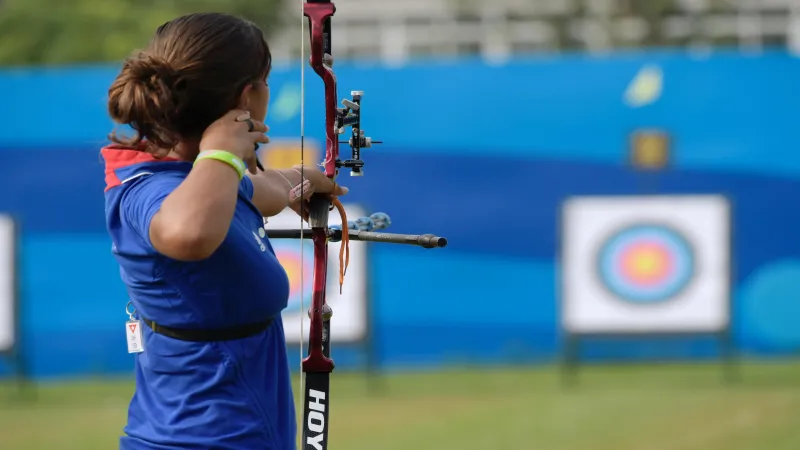
Photo: archery coach guiding archer indoor range UK, via fittoplay.org
Few purchases in archery feel as decisive as a new bow. A new riser, limbs or set of arrows promises a fresh start, and the equipment market is well practised at making that promise look like progress. Yet for many UK archers, the most economical upgrade is not a product at all. It is a focused block of coaching, delivered over enough weeks to change how the shot is built, repeated and reviewed.
The upgrade instinct
Archery is an equipment-rich sport, and that is part of its appeal. There is always a limb weight, arrow spine, rest, button or string material to consider. When scores stall during the 2026 indoor season, the temptation is to conclude that the bow has become the limiting factor. Sometimes it has. More often, the archer has simply reached the point where a repeatable process matters more than another component.
The difficulty is that equipment purchases are visible. A new bow can be photographed, discussed at the club and tested on the line within days. Coaching is less visible. It involves video review, drills, fatigue management and the slower work of turning a good end into a good habit. The gains are real, but they are earned rather than unpacked.
Cost per point, not cost per item
The case for coaching becomes clearer when the budget is assessed in cost per point rather than cost per item. A mid-range bow, limbs, setup and a matching set of arrows can easily absorb £900 to £1,500. A block of six one-to-one sessions with a reputable coach might cost £300 to £600, depending on region, format and the coach’s experience. Those figures are indicative, but the comparison is useful.
Suppose a new bow produces a modest improvement of five points across a Portsmouth round. That is a reasonable outcome if the old bow was genuinely unsuitable. Suppose a coaching block produces fifteen points over the same period because the archer’s anchor, release and sight marks become more consistent. The second route is not merely cheaper per point. It is also more likely to transfer to the next bow, the next season and the next competition.
This is not an argument against equipment. It is an argument against spending on equipment before diagnosing the problem. A bow that fits poorly will hold an archer back. But a bow that fits well and is paired with an inconsistent shot process will simply allow the archer to be inconsistent in a more expensive way.
Auditing the fault line
Before committing the next archery budget, it helps to separate equipment problems from execution problems. The audit need not be complicated, but it should be honest and recorded over several sessions rather than one good or bad night.
Start with group shape. A group that is wide and inconsistent usually points towards execution: inconsistent anchor, varying release tension, changes in bow-arm pressure or fatigue. A group that is tight but consistently off-centre may point towards sight adjustment, tuning or arrow matching. A group with occasional unexplained flyers may justify checking arrow straightness, nock fit and rest clearance.
Then consider the bow itself. Is the draw length appropriate? Is the limb weight manageable across a full competition, not just a short practice? Are the arrows correctly spined for the current setup? Is the rest timing consistent? These are legitimate equipment questions. They should be answered with measurement and evidence, not with a catalogue.
Finally, consider the archer’s process. Can the shot be described in clear steps? Does the archer know what a good release feels like without looking at the target? Does performance hold up in the final end of a round? If the answer to these questions is uncertain, a coaching block is likely to offer a better return than a new bow.
A simple spending framework
A disciplined framework can prevent an expensive mistake. First, define the goal in measurable terms: a ten-point improvement in a Portsmouth round, a more stable group at 18 metres, or a repeatable shot process under competition pressure. Second, estimate the gap between current performance and that goal. Third, ask whether the gap is mainly technical, physical or equipment-related. Fourth, price both routes: the equipment change with setup and matching arrows, and the coaching block with practice time included.
The decision rule is straightforward. If the bow is correctly fitted and the archer cannot yet reproduce the shot consistently, coaching comes first. If the bow is clearly unsuitable for the archer’s draw length, limb weight or discipline, equipment comes first. If the group is tight but misplaced, tuning or sight work may be the answer before either a new bow or a long coaching programme. In most cases, a short diagnostic session with a coach is the cheapest way to decide.
What a good coaching block should buy
A coaching block should not be a series of pleasant sessions with no measurable outcome. It should have a clear purpose, a review point and a plan for practice between sessions. For a UK archer, that might mean six sessions across the winter indoor season, with video review, blank-bale work, scoring rounds and a simple log of what changed.
The coach should be able to explain what is being tested, why it matters and how progress will be judged. The archer should leave each session with one or two specific practice tasks, not a list of twenty corrections. Good coaching reduces noise. It does not add more things to think about on the line.
When equipment is the right call
There are times when a new bow is the sensible purchase. An archer who has outgrown a junior bow, changed discipline, or is working with equipment that cannot be adjusted to a safe and repeatable setup should not be told to persist with unsuitable kit. The point is not to delay equipment indefinitely. The point is to make equipment serve the archer rather than substitute for development.
For most UK archers, the next budget will do more good in a coaching block than in a bow bag. The arithmetic is persuasive, the gains are more durable, and the process teaches something that remains useful long after the equipment has changed. Spend where the points are.