Clockwork on the Line: A Timed Routine for Indoor Competition Archery

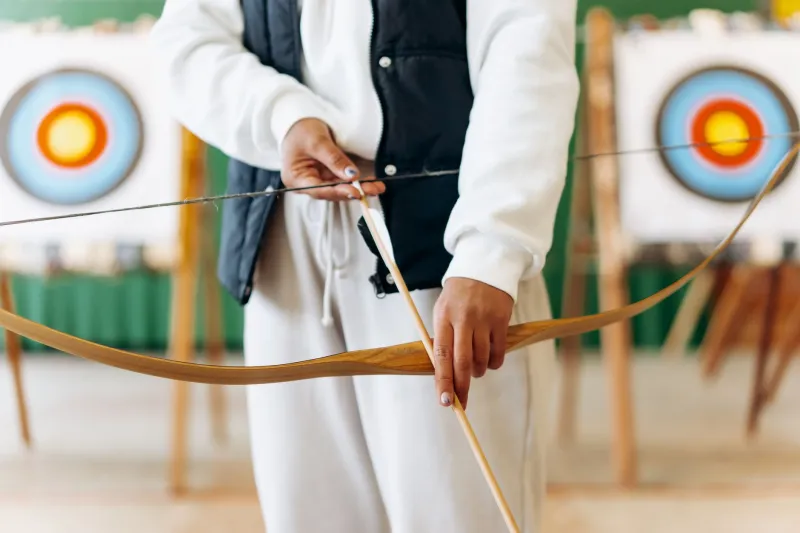
Photo by Photo by Claudio Schwarz on Unsplash on Unsplash
Indoor archery is often described as a test of precision, but at competition level it is equally a test of tempo. The target is close enough that most experienced archers can group well in practice; the difficulty lies in producing that group when the clock is visible, the line is busy and the Director of Shooting is about to call the next end. A routine that feels calm during a quiet club night can dissolve into a sequence of half-finished thoughts once the timer starts.
The solution is not to think more. It is to build a routine with fewer decisions, timed checkpoints and rehearsed responses. The aim is a thirty-second shot contract: a short, repeatable sequence that carries the archer from approach to follow-through without inviting a committee meeting in the mind.
Why thirty thoughts fail under time pressure
Many archers practise with an internal checklist that grows longer as the score matters more. Check the stance, check the grip, check the hook, check the sight, check the release, check the follow-through, check the clock. Each item is reasonable in isolation, but together they compete for attention at the exact moment attention should be narrowing. The result is a shot that is either rushed to beat the clock or delayed until the clock makes the decision.
A competition-safe routine works differently. It uses external cues and fixed timings to reduce the number of decisions. The archer is not trying to feel perfect; they are trying to complete a known sequence at a deliberate pace. Thirty seconds is enough time for a shot. Thirty thoughts are not.
Building the thirty-second contract
The exact timings will vary with bowstyle, experience and the format being shot, but the principle applies across indoor disciplines. A useful starting point is to divide the shot into four short phases and give each a clear purpose.
The first phase, roughly the opening eight seconds, is approach and set-up. The archer steps onto the line, sets the feet, checks the bow hand and establishes the hook. This is not the time for a broad equipment audit. It is a time for a small number of physical confirmations.
The second phase, approximately ten seconds, covers draw and transfer. The archer draws with a familiar rhythm, moves the load into the back and settles the sight picture. The key is continuity: no pause for self-commentary, no restart because the sight picture is not immaculate.
The third phase, around ten seconds, is hold, expansion and release. The archer maintains tension, lets the sight settle and releases as part of continued expansion rather than as a separate action. The final phase, the last few seconds, is follow-through and reset. The archer holds the finish briefly, lowers the bow safely and returns attention to the next task.
This is not a rigid script to be obeyed to the tenth of a second. It is a cadence. The value lies in having a known shape to the shot, so that when the clock is present the archer is executing a routine rather than inventing one.
A timed drill for club nights
The drill can be run on a normal club night without special equipment beyond a visible timer or a phone placed safely behind the line. Set a timer for the end time used in the relevant competition format, and shoot three-arrow ends at a pace that reflects competition rather than practice.
Before each end, run a sixty-second equipment check: tab, sling, bowstand, arrows and sight. Keep it brief and physical. The purpose is not to find a problem but to confirm that nothing has changed since the last end.
During the end, the archer should aim to complete each shot within the thirty-second contract. A partner can act as a line caller, using the standard commands the archer will hear at a competition. This matters because many routines fail not at the shot itself but at the transition between ends, when the archer is unsure whether to step back, adjust equipment or wait for the next call.
After the end, score the arrows if appropriate, but also record a simple routine note. Did the contract hold, or did it break? If it broke, identify the phase where it broke. Was the set-up rushed? Did the draw become hesitant? Did the follow-through get cut short? The score is secondary in this drill. The objective is routine integrity under time pressure.
Rehearsing the line, not just the shot
Indoor competitions are full of small procedural moments that can disturb an otherwise sound shot routine. The call to the line, the instruction to shoot, the signal to stop, the collection of arrows and the movement back to the waiting area all form part of the archer’s experience. Rehearsing these transitions is as important as rehearsing the draw.
A useful progression is to run the drill over four weeks. In the first week, use blank bale or a close target and focus only on the thirty-second cadence. In the second week, add line calls and a visible clock. In the third week, shoot scored ends with the same routine and the same transitions. In the fourth week, simulate a full indoor round, including the equipment check, the warm-up and the between-end reset.
This progression is deliberately modest. It does not require more arrows; it requires more representative arrows. For archers preparing for county, regional or club competitions in the 2026 indoor calendar, that distinction is important. The goal is to make the routine familiar enough that competition conditions reveal its strengths rather than its gaps.
Competition day: fewer decisions, same contract
On competition day, the routine should be recognisable from practice. Arrive with enough time to complete the equipment check without hurry. Use the warm-up to establish the pace of the day, not to chase a score. When the line call comes, run the same set-up. When the clock starts, trust the contract.
If something feels wrong, the response should be a reset cue rather than a new plan. A breath, a re-set of the feet, a check of the hook, a return to the sight picture. The archer is not trying to eliminate nerves; they are trying to prevent nerves from adding extra steps to a routine that already works.
Indoor competition does not demand a complicated mental approach. It demands a repeatable one. Build the thirty-second contract, rehearse it with the clock and the line calls, and let the routine carry the shot when the mind would otherwise try to carry everything at once.