The Unscored Hour: Using Blank Bale to Rebuild the Shot This Winter

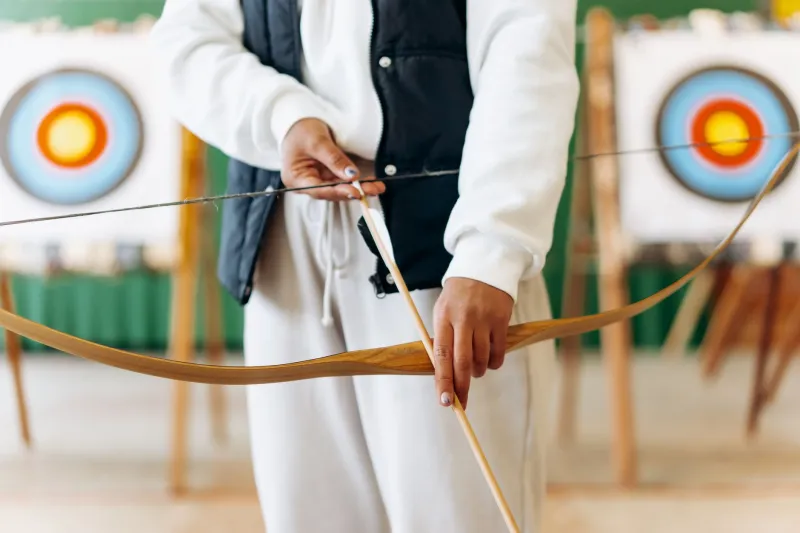
Photo: archer shooting blank bale indoor archery hall close range practice, via www.tipsbulletin.com
There is a particular kind of frustration that settles in during the indoor season. The archer is shooting regularly, the bow is set up sensibly, and yet the group has stopped improving. Sometimes the shot process itself feels fragile: the anchor is not quite where it was, the release has become a negotiation, and the target face seems to invite a correction before the shot has even settled. In these moments, more scoring is rarely the answer. The blank bale offers something different: a space in which the archer can feel the shot again without the scoreboard making an early judgement.
Why the target face can wait
Scoring is not the enemy. It is, however, a powerful stimulus. Once a target face is present, attention tends to migrate towards the result: where the arrow landed, what the group looks like, whether the last end was better or worse. For an archer whose process has become inconsistent, that migration can reinforce the very habits that need to change. Blank-bale practice removes the result and returns attention to the sequence. The bale does not care where the arrow goes. It asks only that the shot is completed with intention.
This is not a retreat from competition. It is preparation for it. The winter months are an opportunity to rebuild the shot at a pace that the outdoor season rarely allows. A disciplined block of no-score work can restore rhythm, clarify the expansion through the clicker or release aid, and give the archer a reliable reference point when scoring resumes.
Setting the station
Close-range work is usually best. For recurve archers, three to five metres is often sufficient; compound archers may prefer a similar distance with a suitable backstop. The bale should be large enough to catch a stray arrow safely and positioned so that the archer can shoot without distraction. Use the same stance, the same anchor and the same equipment as in competition. The point is not to create a separate technique but to rehearse the real one in a lower-stakes setting.
Remove the target face entirely. A plain bale, or a bale covered with a blank sheet, is ideal. If the club requires a face for safety reasons, turn it around or use a plain backing. The absence of a scoring ring is the point.
A twenty-five-minute structure
A useful session does not need to be long. Twenty to thirty minutes of focused blank-bale work is often more productive than an hour of distracted scoring. The following structure can be adapted to the archer's needs.
Minutes 0–5: Settle and rehearse
Begin with a few deliberate warm-up draws and a short sequence of shot rehearsals without a bow, if that is part of the archer's routine. Then shoot three to five arrows at close range with no specific technical goal beyond feeling the sequence. The aim is to arrive at the bale, not to solve anything yet.
Minutes 5–15: One focus at a time
Choose a single element of the shot. It might be the transfer of tension into the back, the stillness at full draw, the expansion through the clicker or the follow-through. Shoot short ends of three arrows, pausing between ends to check whether the focus was present. Do not add a second technical instruction. The discipline lies in resisting the urge to fix everything at once.
Minutes 15–22: Add rhythm
Once the single focus feels repeatable, add a gentle rhythm. Shoot three arrows with a consistent pause between them, then three more with a slightly quicker cadence. The goal is not speed but continuity: the shot process should feel like a sequence rather than a series of separate decisions.
Minutes 22–30: Transfer without scoring
Finish with three to six arrows shot at a target face, but do not score them. The face is there to provide a visual reference, not a verdict. Shoot the same process, then walk away without analysing the group. If the archer cannot resist looking at the group, cover the face or turn it around for the final ends. The transfer is about carrying the feel into the presence of a target, not about proving that the feel works.
What to attend to
The blank bale is most useful when attention is specific. Rather than asking whether the shot felt good, ask where the tension was, whether the anchor remained stable, whether the release was an active decision or a reaction, and whether the follow-through was complete. These questions are process-oriented and can be answered without reference to arrow placement.
It is also worth noticing the moments before the shot. Tension in the grip, a rushed set-up or a change in breathing can all be felt at the bale and corrected before they become embedded. The blank bale makes these small signals easier to hear because the target face is not shouting over them.
Common traps
One trap is turning blank-bale work into a technical audit every session. The archer who arrives with five things to fix will usually fix none of them. Another is treating the bale as a punishment for poor scores; it is not a remedial space but a legitimate training tool. A third is failing to transfer the work back to the target. Blank-bale practice should inform scored shooting, not replace it indefinitely.
Signs it is working
Improvement may be quiet. The archer may notice that the shot feels less rushed, that the anchor is more consistent or that the release is cleaner. The group may not change immediately, and that is acceptable. The purpose of the unscored hour is to rebuild the conditions in which good groups become possible. When scoring resumes, the archer should be able to carry the same sequence into the target face without the scoreboard taking over.
Winter is a good time for this work. The indoor season offers regular shooting, but it also offers the chance to step back from constant measurement. A structured block of blank-bale practice, repeated weekly for a few weeks, can restore the sense that the shot belongs to the archer rather than to the score.