Before the First End: Preparing Shoulders and Hands for Cold Club Nights
November club nights in the UK have a particular character. The hall is booked, the tea is welcome, but the air is often cold and the first end can feel like a negotiation with your own shoulders. As the 2026 indoor season gets underway, a short physical preparation is not a luxury; it is part of the shot.
Why a cold start changes the shot
Muscle temperature, joint range and proprioception all influence the draw. When the shoulders and thoracic spine are stiff, an archer tends to shorten the draw, lose the anchor or rush the release. Cold hands reduce feedback through the fingers, so the tab or glove feels different and the release can become abrupt. None of this is a matter of toughness; it is a matter of preparation.
A brief warm-up raises tissue temperature and rehearses the movement pattern. It also gives the archer a chance to check that the bow hand is relaxed and the string hand is set. For club archers training once or twice a week, that check is more valuable than a longer session performed in a cold body.
The seven-minute sequence
Set aside seven minutes immediately before the first end. No equipment is required beyond floor space and a little discipline.
Minute 1 — General raise. Walk briskly on the spot, swing the arms across the body and circle the shoulders. The aim is warmth, not fatigue.
Minutes 2–3 — Shoulders and upper back. Perform slow arm circles, wall slides if a wall is available, and standing thoracic rotations. Keep the ribs down and avoid arching the lower back.
Minute 4 — Trunk and hips. Stand with feet apart and rotate gently left and right, then side-bend. This prepares the stable base from which the draw is made.
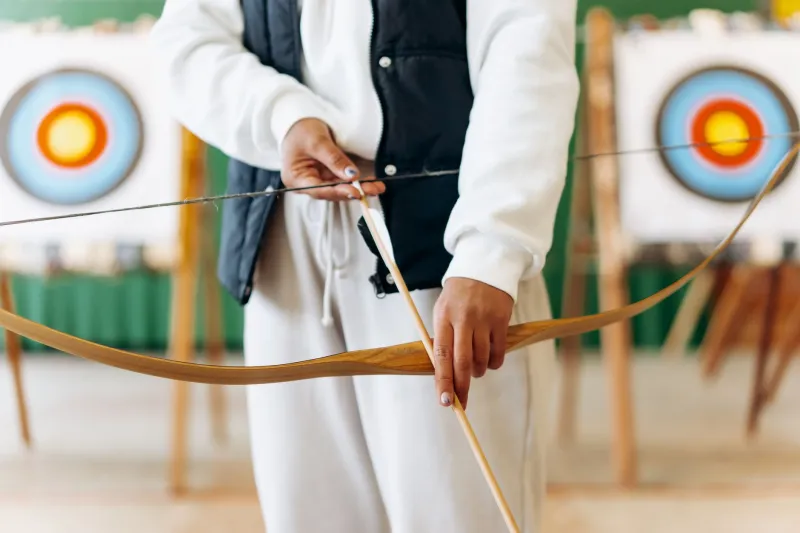
Minute 5 — Hands and forearms. Circle the wrists, open and close the fingers, and perform gentle tendon glides. Do not force the fingers into extension; the string hand needs suppleness, not stiffness.
Minute 6 — Grip and bow hand. Press the palms together, oppose the thumb to each finger, then shake out the hands. Rehearse a relaxed bow hand and a clean string hand position.
Minute 7 — Draw pattern. Without a bow, rehearse the draw, anchor and release in slow motion. Keep the shoulder blade moving around the ribcage and finish with the hand relaxed.
Then shoot the first end at close range, or with a light bow if the club allows it. The purpose is to confirm that the movement is available before the archer asks for precision.
Indoor halls and outdoor ranges
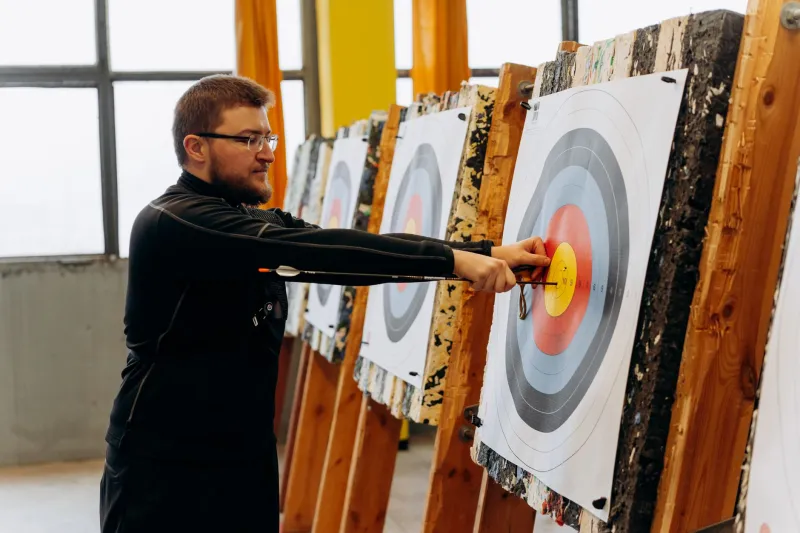
The same seven minutes can be adapted to the conditions. In an indoor hall, use a wall for slides and remove outer layers once the general raise is complete. Hall air can be cold and dry, so pay particular attention to the hands and forearms. Avoid over-dressing; a light layer that can be removed is more useful than a heavy jacket worn throughout the sequence.
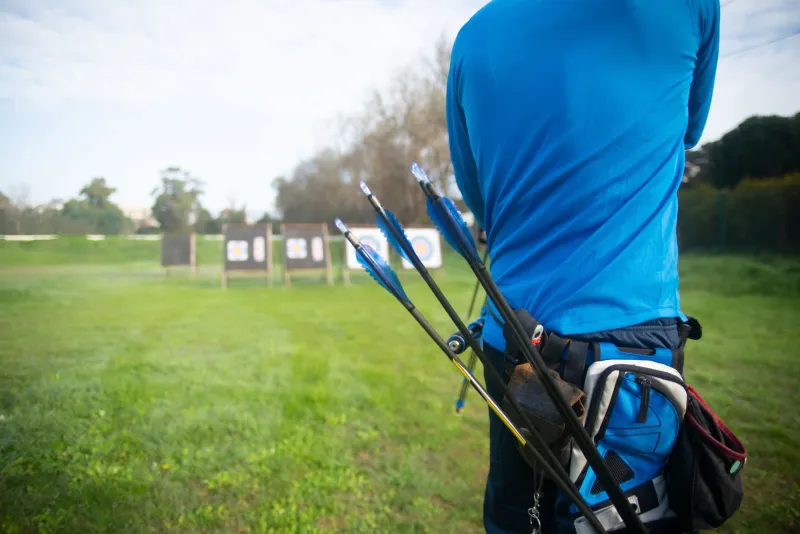
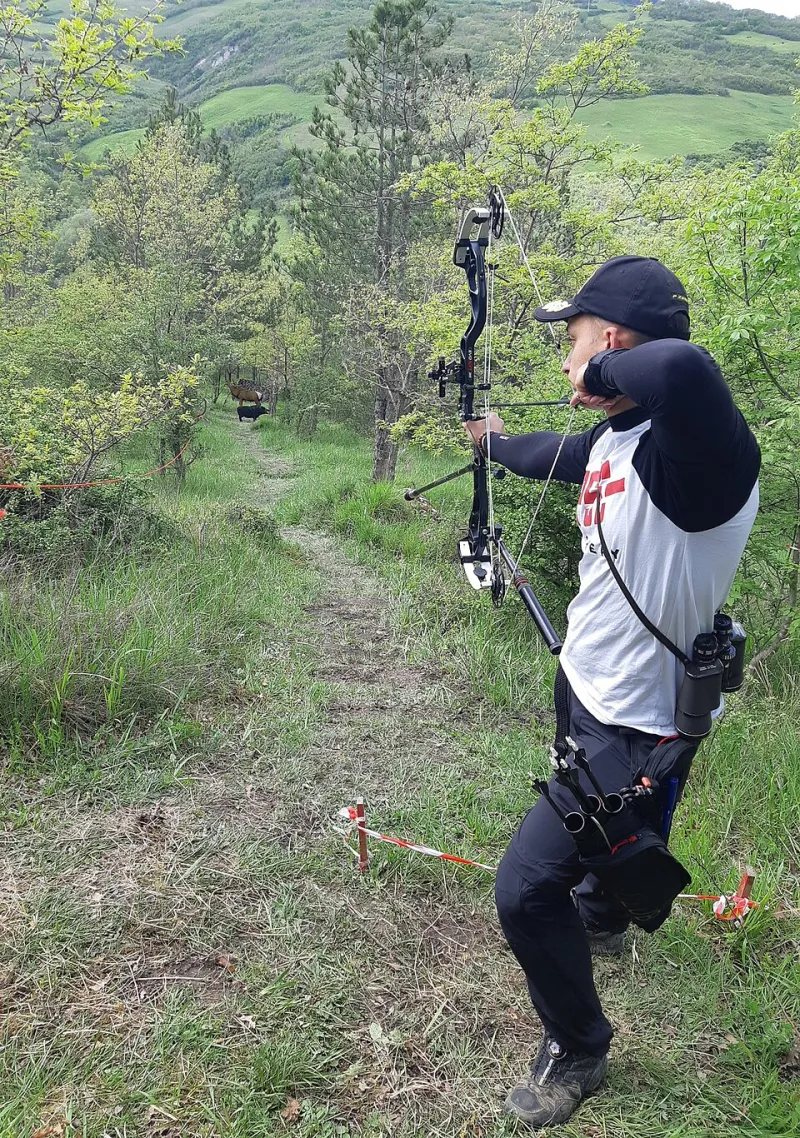
On an exposed outdoor range, the general raise should be longer and the transitions shorter. Keep gloves on until the hand sequence, use a sheltered spot if one exists, and avoid standing still between ends. On frosty or windy days, warm the tab or glove inside the jacket and keep the string hand moving. In genuinely cold weather the outdoor variation may take ten minutes, but the principle remains the same: prepare the tissues, rehearse the pattern and check the hands before the first scoring arrow.
What to check after the warm-up
Check the sight marks. A warmer shoulder may allow a longer draw and a slightly different anchor. Do not adjust the bow during the first end; note the change and discuss it with a coach.
Check release timing. If the release feels rushed, slow the process rather than forcing the shot. A clean release is usually a product of available range and relaxed fingers, not additional effort.
Check fatigue. If the sequence leaves you tired, reduce it. A warm-up should make the first end feel more normal, not less.
Making it a club habit
Coaches can lead the sequence before the first end; it takes little space and no equipment. Archers arriving late can complete a shorter version, provided they still address the shoulders and hands. The aim is consistency: same sequence, same order, same attention to the bow hand and string hand.
A warm-up does not guarantee a perfect shot, but it removes one avoidable variable. In a cold hall or on a damp range, seven minutes is a sensible investment in the shot that follows.