Ten Arrows, One Focus: A Repeatable Practice Block for Time-Pressed Archers
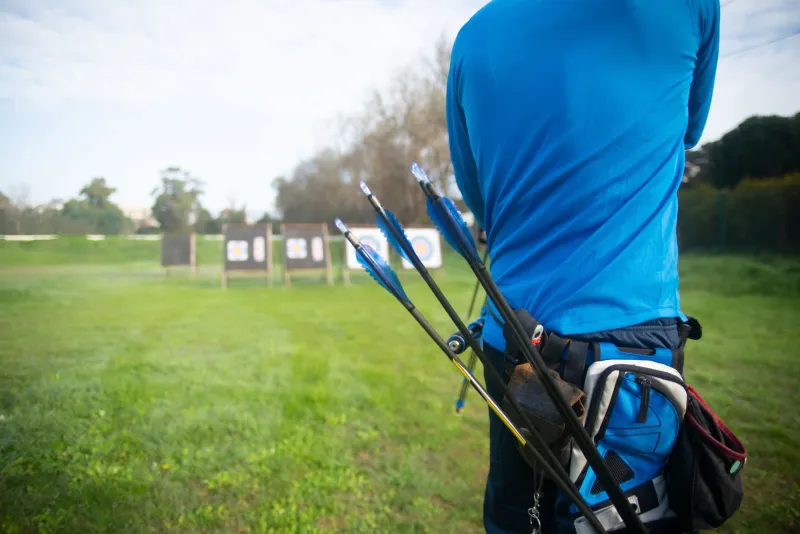
Many UK archers do not have the luxury of daily practice. Work, family commitments, travel and club-night schedules often limit shooting to one or two sessions a week. In that situation, the instinct is often to shoot as many arrows as possible. The result can be a large volume of practice with very little learning.
The ten-arrow reset offers a different approach. It is a compact practice block built around one technical focus, ten arrows, a clear scoring decision and a two-minute review. The aim is not to replace longer sessions. It is to make short sessions count.
The case for quality over volume
Archery rewards repetition, but not all repetition is equal. Once fatigue or boredom sets in, additional arrows can reinforce the wrong process. A smaller block with a defined purpose gives the archer a better chance of noticing what is happening and making a deliberate adjustment.
This matters especially for archers who shoot infrequently. A session of sixty arrows spread across six focused blocks can be more productive than a session of one hundred and twenty arrows shot without a clear intention. The ten-arrow block is short enough to preserve attention and long enough to reveal a pattern.
The ten-arrow reset protocol
The protocol has four parts: set one focus, shoot ten arrows, make one scoring decision and review for two minutes.
First, choose a single technical focus for the block. This should be a process cue rather than an outcome goal. Examples include maintaining bow-arm pressure, completing expansion, keeping the release hand relaxed or holding the follow-through until the arrow lands. The focus should be specific enough to observe and simple enough to remember.
Second, shoot ten arrows. Do not change the focus halfway through. If the focus is lost, note it and return to it. The block is not a test of perfection; it is a test of whether the archer can sustain attention on one element.
Third, decide before the block whether to score. The scoring decision should serve the focus. If the archer needs outcome feedback, score all ten arrows and record the group or total. If the focus is purely technical, shoot without scoring and assess the process instead. The important point is to decide in advance, not to drift between the two.
Fourth, review for two minutes. Write down one thing that worked, one thing that slipped and the focus for the next block. This review should be brief and factual. It is not a post-mortem. It is a bridge to the next repetition.
Choosing the technical focus
A common error is to choose too many focuses. The archer decides to improve expansion, release, follow-through and alignment all at once. The result is confusion. The ten-arrow block works because it narrows attention.
A coach can help identify the focus, but the archer should also learn to choose one independently. Good candidates are elements that are observable, repeatable and linked to the archer's current development. A recurve archer might focus on expansion through the clicker. A compound archer might focus on execution and release-aid control. A barebow archer might focus on anchor consistency and string picture. The specific cue matters less than the discipline of holding one cue for ten arrows.
The scoring decision
Scoring is not automatically useful. It can provide valuable feedback, but it can also pull attention away from the process. The ten-arrow reset therefore treats scoring as a decision rather than a default.
On a technical block, the archer might shoot without scoring and use a blank boss or simply ignore the score. On a performance block, the archer might score all ten arrows and record the group size, the number of arrows in the central area or the total. The key is to avoid switching mid-block. If the decision is to score, score honestly and consistently. If the decision is not to score, leave the scorecard alone.
Variations for recurve, compound and barebow
Recurve archers can use the block to reinforce expansion, clicker control and follow-through. A short indoor session at eighteen metres works well for process-focused blocks. An outdoor session can use a longer distance for scoring blocks, provided the archer is not chasing a personal best every time.
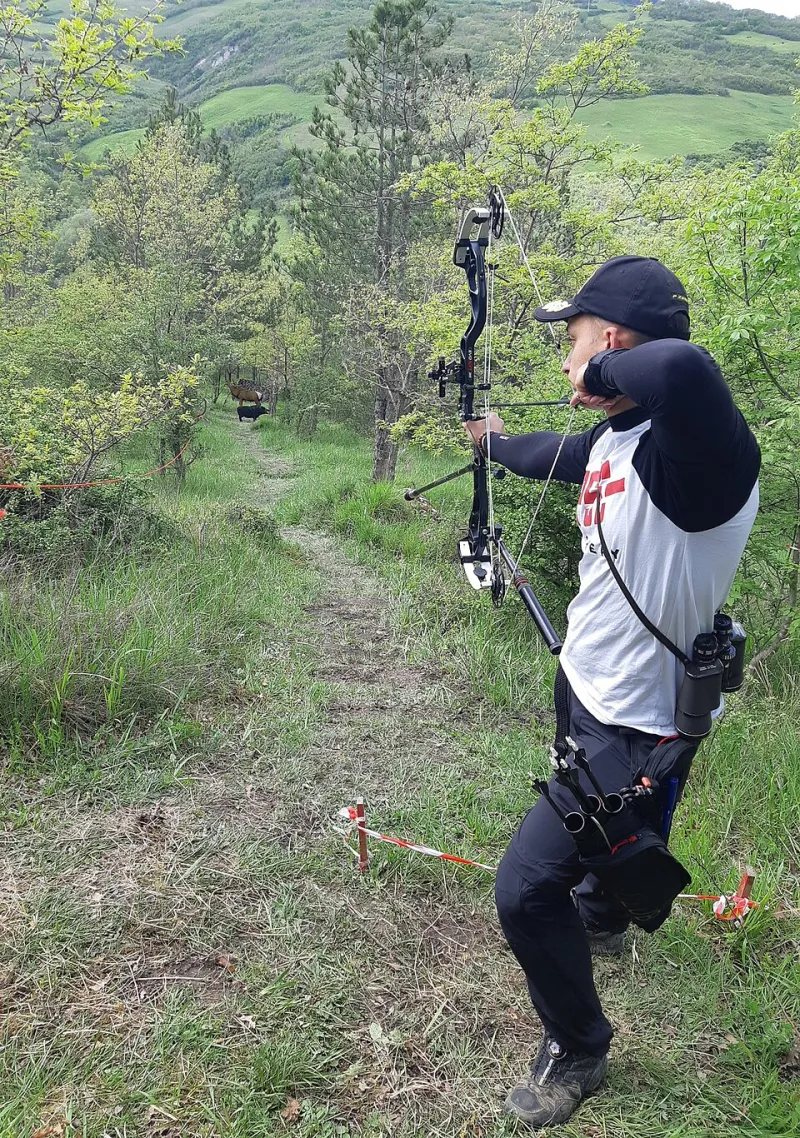
Compound archers can use the block to focus on execution, release-aid discipline and the relationship between the sight picture and the release. Because compound equipment can encourage a score-oriented mindset, the no-score block is particularly useful. It allows the archer to feel the shot rather than evaluate every arrow.
Barebow archers can use the block to stabilise anchor, string picture and release. Shorter distances are often appropriate for technical work, especially when the focus is on consistency rather than distance. The two-minute review is valuable here because barebow form can drift subtly without the archer noticing.
Fitting the format into club nights and lunch breaks
A club night can accommodate three to five ten-arrow blocks, including a warm-up and a short cool-down. The archer should arrive with a focus already chosen. This prevents the first block from becoming a warm-up in disguise.
A lunch break can accommodate one block if the archer has access to a short indoor range or a safe practice space. Even ten arrows with a clear focus and a two-minute review can maintain a technical thread between longer sessions. The format is not a substitute for match practice, but it keeps the process alive.
Tracking and progression
A simple log is enough. Record the date, the focus, whether the block was scored and one observation. After four weeks, review the log for patterns. If the same error appears repeatedly, it may be time to involve a coach. If the focus is holding, the archer can move to a different technical element.
Progression should be measured by the quality of attention, not by the number of arrows. An archer who completes three focused blocks in a week is not necessarily behind an archer who shoots daily without a plan. The ten-arrow reset is a tool for making limited time more useful.
Common errors to avoid
The most common error is changing the focus too often. The second is scoring every block and turning practice into an informal competition. The third is skipping the review. The review is short, but it is the part that turns experience into learning.
For archers with real jobs and limited range time, the ten-arrow reset offers a realistic structure. It respects the constraints of UK club life while insisting on a clear purpose. Ten arrows, one focus and a two-minute review may not sound ambitious, but repeated consistently, they can build a more reliable shot.