Selection Is an Evidence Exercise: Auditing Your Case for County and Regional Squads
Photo: North Lincolnshire Museum, Martin Foreman, 2010-03-10 11:26:27, CC BY-SA 2.0, via Wikimedia Commons
County and regional squad selection is often discussed as though it were a single trial score writ large. In practice, selectors assemble a portfolio of evidence. They compare archers across different rounds, in different conditions, and sometimes under the specific pressure of a team environment. The scorecard matters, but it is one exhibit among several.
For an archer hoping to be considered, the useful question is not simply whether the scores are high enough. It is whether the evidence is coherent, recent and relevant. A self-audit before trial shoots can expose gaps that a good club score cannot hide.
Why the scorecard is only one exhibit
A selector reviewing a county or regional squad will typically see a mixture of qualifying scores, competition results, coach feedback and direct observation. The panel is not usually looking for a single outstanding day. It is looking for a pattern that suggests the archer can contribute across a season and represent the squad reliably.
That is why a personal best achieved in calm conditions may carry less weight than a series of solid performances in wind, rain or unfamiliar venues. Selectors are entitled to ask whether the archer can repeat a process when the conditions are not ideal. The scorecard records the outcome; the selector is also trying to read the process behind it.
Consistency across rounds and conditions
UK archery offers a wide range of rounds, from indoor Portsmouth and WA18 competitions to outdoor WA1440, National and club-level events. A county or regional panel will often consider how an archer performs across this spread rather than in one favoured format.
Consistency does not mean identical scores. It means the archer has a recognisable baseline and a limited range of variation. A record showing 540, 538 and 545 in comparable rounds tells a different story from one showing 560, 515 and 548. The first suggests repeatability; the second suggests volatility that may be difficult to manage in a squad setting.
Before a trial shoot, archers should review their last twelve months of results by round and by condition. It is worth identifying the three strongest performances, the three weakest, and any obvious reason for the difference. Selectors will often see the same pattern, so it is better to understand it first.
Head-to-head behaviour
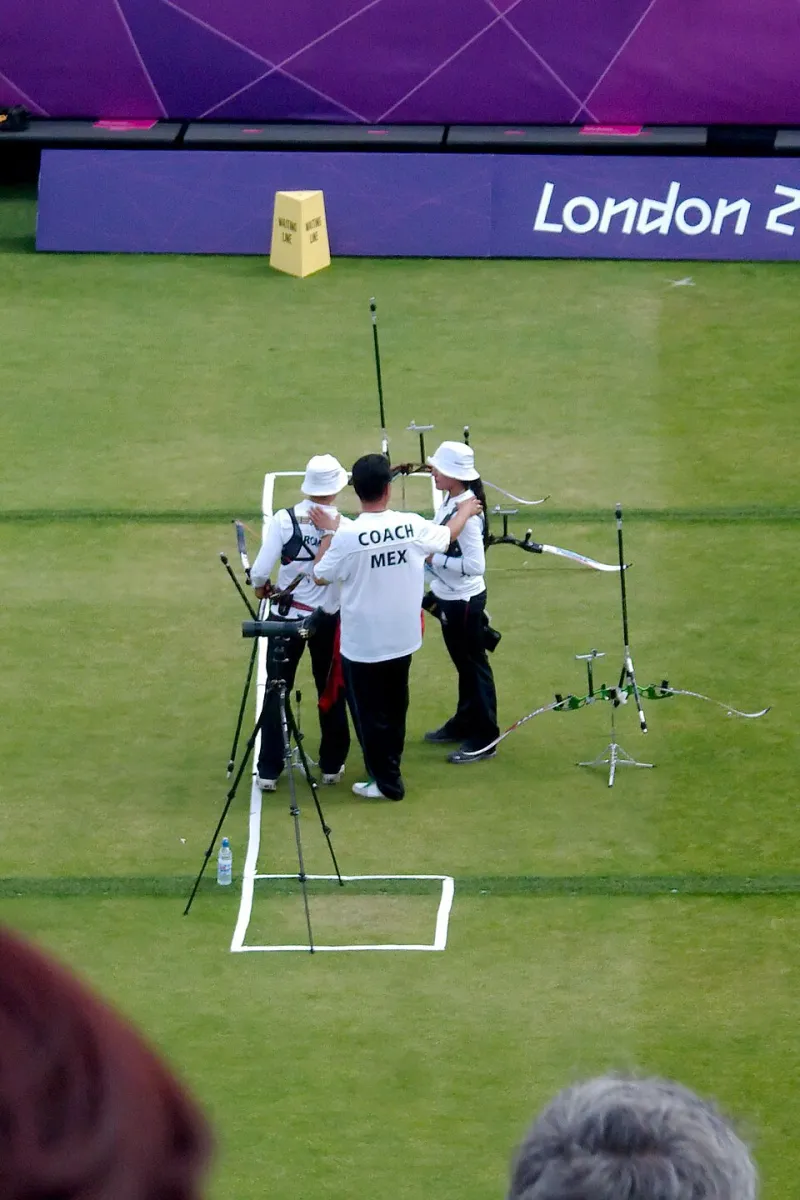
Squad selection can involve team events, head-to-head formats or shoot-offs. In those situations, selectors observe more than the final arrow. They notice pace of play, recovery after a poor end, communication with teammates, etiquette on the line and the ability to follow a team plan.
An archer who wins a head-to-head but disrupts the shooting line is not automatically a stronger selection prospect than one who loses narrowly while remaining composed. Panels value people who can be trusted in a representative environment. That does not mean personality replaces performance, but behaviour is part of the evidence.
A useful audit question is: what would a selector see in my last three head-to-head matches if they ignored the result? The answer should include how quickly the archer reset, whether the shot process held together, and whether the archer remained aware of the broader team context.
Equipment reliability as a selection criterion
Equipment failure is not merely an inconvenience. In a squad context, it creates uncertainty. Selectors and team managers prefer archers whose equipment is well maintained, understood and supported by sensible spares.
This is especially relevant in the UK, where travel, changing weather and indoor-to-outdoor transitions can expose weak points. An archer who has reliable sight marks, a consistent arrow batch and a clear maintenance routine is easier to select than one whose setup is frequently in flux.
Before trial shoots, audit the equipment record. Note any malfunctions in the past year, how they were resolved and what spares are carried. Check that the bow, sight, rest, release aid or tab, and arrows are all behaving consistently. Reliability is not glamorous, but it is a genuine performance attribute.
Recent form versus long-term potential
Selection panels rarely choose on recent form alone, but they rarely ignore it either. A strong result last month carries more weight than a strong result two seasons ago. At the same time, a developing archer with a clear upward trajectory may be considered alongside a more experienced archer whose scores have plateaued.
The balance depends on the level and the purpose of the squad. County squads may look for archers who can perform now while also supporting development. Regional squads may place greater emphasis on competitive evidence and consistency. National-level consideration generally requires a more established record and a clearer demonstration of performance under pressure.
Being selectable at county level usually means showing consistent attendance, a reliable baseline score, appropriate behaviour and a willingness to work within a squad structure. At regional level, the score evidence needs to be stronger and more varied. At national level, selectors are typically looking for a sustained competitive record, not a single breakthrough.
A pre-trial self-audit checklist
Before a trial shoot, work through the following checklist and record honest answers:
- Have I listed my results from the past twelve months by round, venue and condition?
- Can I identify my normal score range, not just my best score?
- Do I have evidence of performing in wind, rain or unfamiliar settings?
- What do my last three head-to-head or shoot-off performances show about my behaviour and recovery?
- Is my equipment log up to date, including any failures and fixes?
- Do I carry sensible spares and know my sight marks for likely venues?
- Have I asked a coach for an honest view of my current selection readiness?
- Can I commit to the training, travel and team expectations of the squad?
- Is my recent form genuinely recent, or am I relying on older results?
- Have I identified the two or three gaps that a selector would notice immediately?
What to do with the audit
The purpose of the audit is not to create a perfect record. It is to make the archer's case legible. If the evidence shows a gap in consistency, the response should be targeted practice and better record-keeping. If it shows a gap in head-to-head behaviour, the response may be to seek out more match practice. If it shows equipment risk, the response is maintenance and backup planning.
Selectors are not usually searching for reasons to exclude archers. They are trying to build a squad that can perform and represent the county or region well. An archer who understands the evidence, addresses the weak points and presents a coherent case is easier to select than one who simply hopes that the latest scorecard will speak for itself.