Thirty Arrows, One Clear Picture: A Coach's Method for Indoor Group Analysis
Indoor archery rewards repeatability. At 18m, with a familiar face and a controlled environment, small changes in execution become visible very quickly. That makes the indoor season an ideal time to run a simple diagnostic rather than simply shooting score after score. The thirty-arrow test below is not a trial or a selection round. It is a structured observation exercise designed to help UK archers separate execution errors from aim or equipment concerns, and then convert the findings into a focused practice block.
Set the Test Before You Shoot
A diagnostic is only useful if it can be repeated. Use the same distance, face, target, rest, arrows and warm-up each time. For most indoor archers, that means 18m on a standard 40cm face, although the principle applies equally to a triple spot or the face used in your local competition. Shoot six ends of five arrows. Record the date, bow setup, sight mark, arrow set, tab or release, and any relevant conditions. Keep the process normal. Do not chase a personal best, and do not adjust the sight during the test.
Before the first arrow, write down the intent: for example, to shoot a controlled thirty-arrow set with a complete shot process on every arrow. That single sentence matters. Without it, the test can become a scoring round in disguise.
Record More Than the Total
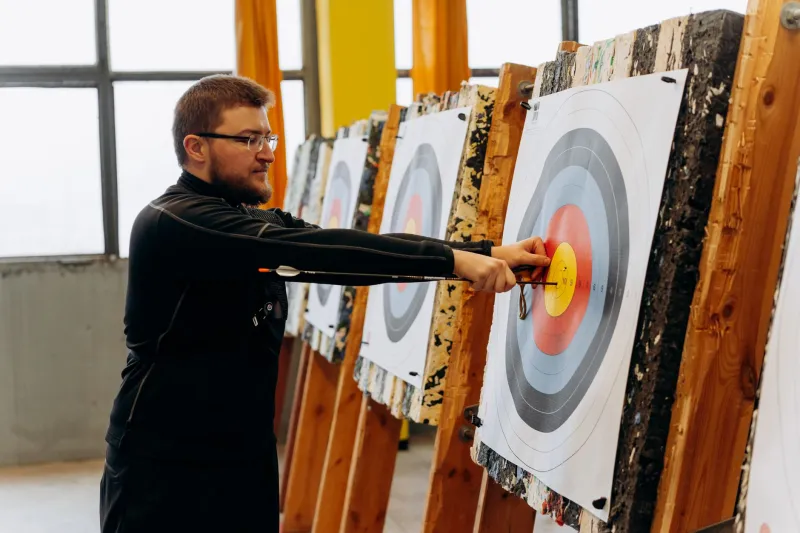
Score is the least interesting part of the exercise. Photograph the face after each end before the arrows are pulled. Note the impact of each arrow, not just the ring. If possible, mark arrow numbers on the photograph or in a simple notebook. The aim is to build a record of group behaviour rather than a list of totals.
There are five useful observations. First, group size: how tightly did the arrows cluster? Second, group centre: was the cluster in the gold, or consistently high, low, left or right? Third, flyers: did one or two arrows leave the group, and were they the same arrows each time? Fourth, fatigue: did the group open in the final ten arrows? Fifth, score pattern: were losses spread across the set, or concentrated in particular ends?
A single flyer is information, not a verdict. If the same arrow repeatedly lands away from the group, it deserves investigation. If flyers are random, the more likely explanation is a variation in the shot process. The distinction is important because it prevents an archer from changing equipment to solve what is actually an execution problem.
Read the Evidence Carefully
Group shape should be interpreted with caution. A tight group that sits consistently away from the centre may point towards a sight or aim setup issue, but only if the group is genuinely tight. A wide group with no clear centre is more often a sign of inconsistent execution than a mis-set sight. Horizontal spread can reflect alignment or release variation; vertical spread can reflect anchor, draw length or timing changes. These are not diagnoses. They are clues that should be tested with a coach and confirmed through repeated observation.
Fatigue trends are especially useful indoors. If the first fifteen arrows are strong and the final fifteen open up, the issue may be endurance, concentration or routine. If the group is stable but the score drops because of occasional low shots, the priority may be shot completion rather than fitness. Record how you felt at the start, middle and end of the test. A simple note such as calm, rushed or tired is enough.
Score patterns can also reveal habits. Losses that cluster in the first end may suggest a warm-up or settling issue. Losses in the last end may suggest a finish-line problem. Losses that appear after a good end may suggest a change in tempo or attention. The value lies in looking for repetition, not in explaining every arrow.
Turn Findings into a Focused Practice Block
A diagnostic should end with one priority and one supporting task. If fatigue is the main finding, build a block that includes several thirty-arrow sets with a short, consistent reset between ends. If horizontal spread is the issue, use blank-boss or alignment drills before returning to a scored face. If the group is tight but off-centre, confirm the sight mark and then shoot group-confirmation ends without changing anything else.
A useful indoor practice block might run for forty-five to sixty minutes: a familiar warm-up, one technical drill linked to the priority, three diagnostic ends, two or three scored ends, and a short review. Keep the review factual. Write down what changed, what stayed the same and what you will test next time. Avoid changing bow setup, arrows and technique all at once. If several variables move together, the next test cannot tell you which one mattered.
Repeat, Compare, Refine
Run the thirty-arrow test every two to three weeks through the indoor season, or more often if you are working closely with a coach. Use the same conditions where possible and compare the photographs, not just the scores. A group that has become smaller or more centred is progress even if the total has not yet moved. A group that has become more consistent under fatigue is also progress.
The test is deliberately simple because simple tests are easier to trust. For UK archers balancing club nights, league matches and county competitions, it offers a practical way to read the evidence, choose one priority and make the next practice session count.