The Evidence Ledger: Testing One Bow Change at a Time Indoors

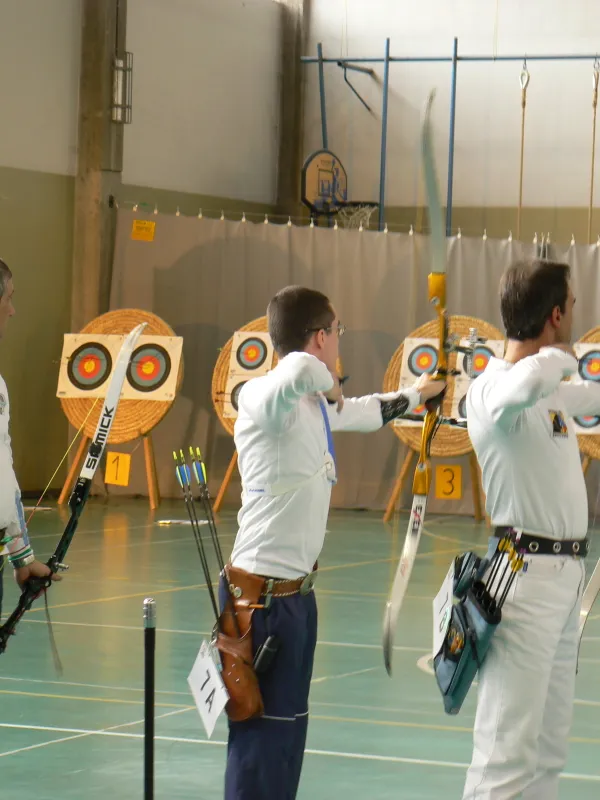
Photo: archery bow tuning notebook indoor target archer equipment close up, via archeryforbeginners.com
Indoor archery has a way of making small changes feel decisive. A nocking point moved by a millimetre, a rest nudged forward, a brace height adjusted by a twist or two: each can produce a group that looks better or worse on the night. The difficulty is separating a genuine improvement from ordinary session-to-session variation. A one-page tuning ledger is a practical answer. It does not replace a coach, and it does not promise laboratory precision, but it gives club archers a disciplined record of what was changed, what was observed and whether the evidence is strong enough to keep the change.
Why one variable at a time matters
Most tuning problems begin with good intentions and too many adjustments. An archer changes the nocking point, then the brace height, then the rest position, and finishes the evening with a tighter group but no clear idea which alteration helped. If the group later opens up, there is no reliable route back.
The principle is simple: change one thing, hold everything else constant, and gather enough evidence to make a decision. That does not mean every club night becomes a controlled experiment. It means the archer chooses a single variable for a defined block of practice and records the result honestly. The aim is not to prove a theory; it is to avoid keeping a change simply because it coincided with a good end.
Setting a fair test
A fair test begins before the first arrow. Choose the variable for the block—nocking point height, brace height, arrow spine, or rest position—and write down the current setting. State what you expect to happen, but keep the prediction modest. “I expect a slightly more forgiving group at 18 metres” is more useful than “this will fix my left misses.”
Keep the conditions as stable as the club allows. Use the same bow, the same set of arrows, the same distance and the same target face. If possible, shoot on the same lane and at a similar time of day. Record the conditions that cannot be controlled: cold hands, a busy range, a change of target face, or fatigue after a long day at work. These notes explain variation rather than disguise it.
A fair test also needs a baseline. Before changing anything, record at least one session with the current setup. Two or three short baselines are better than one, because they show the archer’s normal range. Without a baseline, a good group after a change has no context.
What to record beyond the score
Score is a blunt instrument for tuning. It tells you what landed inside the rings, but not why. The ledger should capture a small number of observations that are quick to record and useful to compare.
Record group size and group centre. A simple estimate is enough: measure the widest spread across the group and note whether the centre sits high, low, left or right of the target centre. For indoor archers, a 40cm face at 18 metres is a familiar reference, but the principle applies at any distance.
Record arrow flight and feel. Were the arrows leaving the bow quietly? Was there any visible porpoising, tail-left or tail-right movement? Did the bow feel harsher, smoother or noisier? These are subjective observations, but they become useful when repeated over several sessions.
Record the misses and the outliers. One low arrow may be a poor release; three low arrows across two sessions may be a tune issue or a fatigue pattern. Note them rather than deleting them from the record.
Finally, record what was changed and when. A setting is only meaningful with a date and a session number. This is especially important indoors, where archers often make small adjustments between club nights and then cannot remember the original position.
A printable one-page template
The template below can be copied into a notebook or printed as a single sheet. It is deliberately short. A ledger that takes ten minutes to complete will not survive a busy club night.
| Field | Entry |
|---|---|
| Date and session number | |
| Variable under test | Nocking point / brace height / arrow spine / rest position |
| Current setting and proposed change | |
| Baseline group size and centre | |
| Session group size and centre | |
| Arrow flight and bow feel | |
| Outliers or misses | |
| Conditions and fatigue | |
| Decision: keep, reject or park | |
| Reason for decision |
A second small table can track the sequence of tests across the indoor season. This prevents the same adjustment being tried twice in ignorance and shows how the bow has evolved by March.
Reading the evidence without chasing noise
One session is rarely enough. Indoor scores fluctuate for reasons unrelated to tune: a change of release, a cold range, a new target face, or a week of poor sleep. A useful rule is to require three comparable sessions before making a firm decision. Compare the median group size rather than the best single group. Look for a consistent shift in group centre, not a single tight end.
If the evidence is mixed, park the change. Return to the baseline setting and revisit the variable later. Parking is not failure; it is a sensible response to insufficient evidence. The ledger should make that decision easier because the archer can see what was tried and what was observed.
A club-night routine for limited time
Most UK club archers do not have hours to spare. A workable routine fits inside a normal evening. Before shooting, spend five minutes reviewing the previous entry and setting the variable for the night. During practice, shoot the usual ends but keep the ledger nearby. After every three or four ends, note group size, centre and any obvious flight issue. At the end of the session, spend ten minutes completing the entry and writing the decision.
The routine works best when the variable is chosen in advance. Turning up without a plan invites reactive tuning, which is exactly what the ledger is designed to prevent. A coach can also use the sheet to see whether the archer is testing a genuine hypothesis or simply chasing a bad end.
When to keep, reject or park a change
Keep a change when three comparable sessions show a consistent improvement in group size or centre, with no worsening of arrow flight or bow feel. Reject it when the evidence points the other way. Park it when the evidence is unclear, the conditions were poor, or the archer’s form was not stable enough to judge the bow.
The ledger is not a substitute for proper coaching or a full bow setup. It is a simple discipline that makes indoor tuning more honest. In a season where small margins matter, that honesty is worth more than another speculative adjustment.