Meetings, Then the Line: A Compact Mobility Reset for Desk-Bound Archers
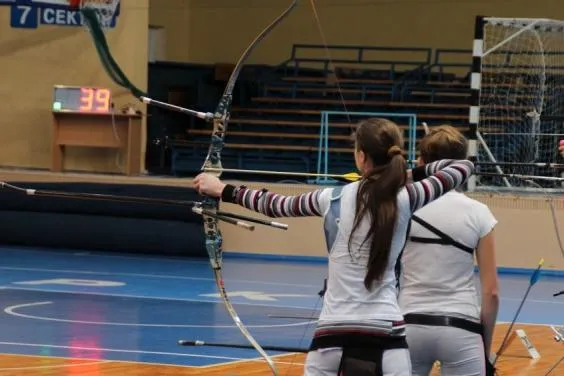
Photo: anonymous , CC0, via Wikimedia Commons
Archery rarely rewards the archer who trains hard for one hour and sits still for the other thirty-nine. For many UK archers, the working week is a long, quiet block of desk time: shoulders rounded over a keyboard, the thoracic spine held in one position, forearms braced against a mouse. The club night then asks for rotation, scapular control and a repeatable shot. The gap between those two demands is where this six-minute reset belongs. It is not a stretching routine to be endured; it is a short maintenance protocol for the body that actually turns up to the line.
Why Six Minutes, and Why Not More
A routine has to survive a working week. Twenty minutes of mobility before breakfast sounds admirable in January and is usually abandoned by the first heavy deadline. Six minutes is short enough to sit between meetings, long enough to address the three areas that most often limit a desk-bound archer: thoracic rotation, shoulder control and forearm endurance.
The aim is not to become more flexible for its own sake. Archery does not require extreme range. It requires range that can be controlled, repeated and reproduced under pressure. A gentle drill that improves the quality of rotation is more useful than a forceful stretch that produces a temporary gain and no usable control.
Before You Start: Two Simple Checks
Use the same two checks before and after the reset for two weeks. The purpose is not to chase a bigger number; it is to notice whether the routine changes what you can control.
Seated thoracic rotation. Sit tall on a firm chair, feet flat, arms crossed over the chest. Rotate the upper body to one side without forcing the hips to follow. Note the range, any stiffness between the shoulder blades and whether one side feels different. Repeat on the other side.
Wall slide with controlled reach. Stand with your back near a wall, arms in a goalpost position. Slide the arms upward while keeping the ribs from flaring and the shoulders from shrugging. Note how far you can move before the lower back takes over. A second check for the forearms is a thirty-second wrist-extension hold against a light band or a small weighted object, kept smooth rather than clenched.
These are not medical tests. They are coaching checks. If either produces sharp pain, numbness or pinching, stop and seek advice.
The Six-Minute Sequence
The sequence is deliberately simple. Perform each movement for about forty-five to sixty seconds, moving slowly and breathing normally. No equipment is required beyond a chair, a wall and, for the forearm work, a light band or a filled water bottle.
Minute one: chair thoracic extension. Sit forward on the chair, hands behind the head, and gently extend the upper back over the chair back. Keep the ribs down and avoid arching the lower back. This is a small movement, not a backbend.
Minute two: seated open-book rotation. Sit tall and turn the upper body to one side, allowing one hand to reach across the body while the other stays supported. Rotate from the ribcage, not the hips. Alternate sides at a steady pace.
Minute three: wall slides. Face the wall or stand with the back near it, depending on which version you can perform without shrugging. Move the arms upward with control, keeping the shoulder blades settled. Quality matters more than height.
Minute four: shoulder external rotation isometric. Stand beside a doorframe and press the back of the hand gently into the frame, keeping the elbow at ninety degrees. Hold for a few seconds, relax and repeat. This is a low-level control drill, not a strength test.
Minute five: forearm endurance. With a light band or water bottle, perform slow wrist extensions and flexions. Keep the forearm supported and the movement smooth. Stop before the grip becomes a clamp.
Minute six: stance and draw rehearsal. Finish standing in your shooting stance, without a bow. Rehearse the first part of the draw with an emphasis on rib position and shoulder control. This connects the reset to the shot rather than leaving it as an isolated exercise block.
Timing It Around Club Nights and Competitions
On a desk day, the full reset is best placed late morning or at lunch. It breaks up the longest period of sitting and leaves the tissues loaded gently rather than fatigued. If you shoot that evening, avoid turning the forearm minute into a grip endurance session. The club night already provides plenty of that.
Before a club session, a shorter version of two or three minutes is usually enough: chair extension, wall slides and a few controlled rotations. Save the fuller routine for earlier in the day. On competition days, familiarity matters more than novelty. Do not introduce a new drill in the car park. Use the movements you have practised for several weeks, keep them gentle and finish with the stance rehearsal.
After a competition, the same routine can help restore easy movement, but it should not be used to "work through" soreness. If the shoulder or forearm is genuinely painful, the correct response is rest and assessment, not more repetitions.
Re-check, Do Not Chase
After two weeks, repeat the two self-checks. A useful outcome is not a dramatically larger range. It is a smoother rotation, a wall slide that no longer relies on the lower back, or a forearm hold that feels less rushed. If nothing changes, the routine may be too generic for your needs. A coach can observe the shooting position; a physiotherapist can assess the tissue. Neither can be replaced by a video algorithm.
When Stiffness Is a Message, Not a Drill
Stiffness after a long day at a desk is common and usually responds to movement. Stiffness that comes with sharp pain, pins and needles, numbness, progressive weakness, night pain, swelling or a recent injury is a different matter. Dizziness, chest pain or breathlessness during mobility work also warrant urgent medical advice.
Archers with hypermobility should be especially cautious about pushing into end range for a sensation of relief. More range is not automatically better range. If one side remains markedly different from the other, or if symptoms persist beyond two or three weeks, speak to a coach or physiotherapist rather than adding another online drill to the list.
The working week will not become a training camp. But six minutes of deliberate movement can make the transition from desk to shooting line rather less of a negotiation. The archer who maintains the basics between sessions is often the one who needs fewer emergency fixes once the season begins.