Short Signals, Clean Shots: Designing a Cue Language for the Line
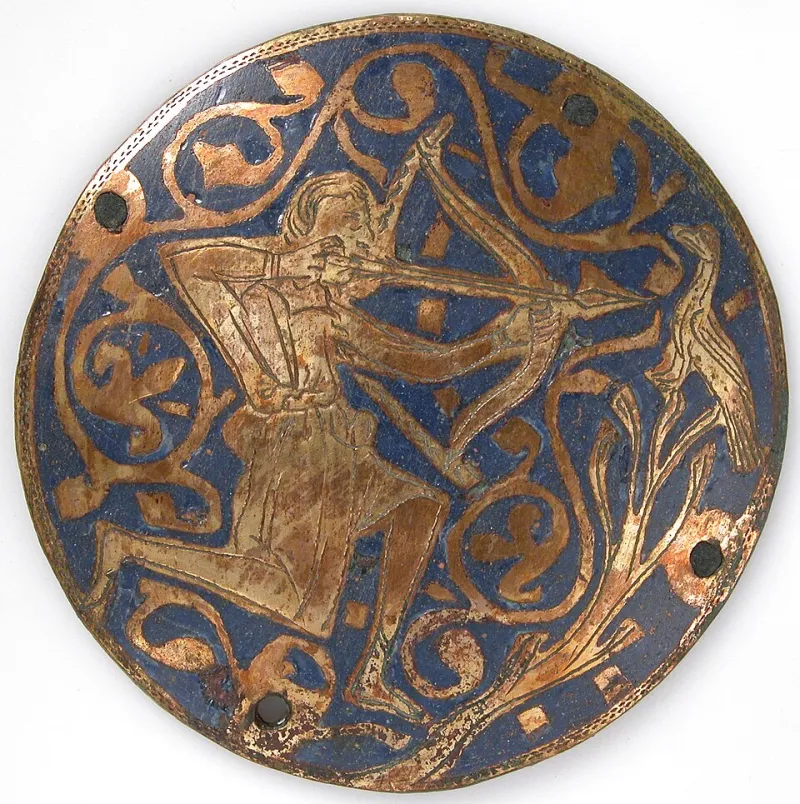
Photo: Unknown, CC0, via Wikimedia Commons
Technical self-talk has a habit of expanding when range space contracts. An archer who spends a club night working through a long checklist can arrive at a county or regional shoot with the same checklist running at twice the speed and half the coherence. The result is rarely greater control. More often it is greater interference. A cue vocabulary is the practical remedy: a deliberately small set of words that triggers actions already learned in practice.
This is not a search for three magic words. It is a design exercise followed by an audit. The words must be chosen for function, introduced at the right point in the training cycle, and tested against observable changes in execution rather than the reassuring feeling of having said something purposeful.
Why fewer words often do more
Under competition pressure, working memory is partly occupied by scoring, timing, weather, equipment checks and the behaviour of the next end. In a UK indoor hall, the line captain’s whistle, the adjacent target and the expectation of spectators add further load. A long technical checklist competes directly with those demands. A cue is compressed instruction. It does not attempt to describe the whole shot; it initiates a phase of the shot that has already been trained.
The distinction matters. A checklist is a learning tool. A cue vocabulary is a performance tool. Archers often try to carry the former into the latter and then mistake mental congestion for concentration.
Three jobs, not three slogans
A workable cue set usually covers three sequential jobs: set, transfer and finish. The first organises the body before the draw. The second governs continued expansion through the clicker or wall. The third addresses release and follow-through. The words should not all describe the same phase, and they should not be three synonyms for ‘steady’.
For a recurve archer, a draft set might be Tall, Through, Away. For a compound archer, Anchor, Roll, Follow. These are illustrations rather than prescriptions. The archer must test whether a word produces a reliable action in their own shot, not whether it sounds plausible in a coaching article.
Choosing words that survive pressure
Good cue words tend to share several qualities. They are short, ideally one syllable and rarely more than two. They are action-directed rather than prohibitive: ‘release’ is more useful than ‘don’t pluck’. They are personal and, where possible, sensory. They are stable enough to remain meaningful across a season. They are also unrelated to score, because a cue tied to outcome invites the archer to check the result before the shot has finished.
Vague words are the common failure. ‘Smooth’ may feel appropriate, but it does not tell the body what to do. ‘Strong’ can encourage a static hold rather than continued expansion. ‘Perfect’ is worse still: it asks the archer to judge the shot at the moment when judgement should be suspended. A better word describes a direction, a pressure or a completion.
From checklist to cue: a four-stage introduction
Begin on paper. Write the full technical checklist you currently use, then group it into the three phases of set, transfer and finish. Reduce each group to one word that represents the most important action for you at this stage. This is a coaching decision, so involve a coach if one is available; the archer’s preferred word is not always the most useful one.
Introduce the words at close range or on a blank bale. The purpose is timing, not accuracy. Say the relevant word internally at the moment it should trigger the action. Twelve to eighteen arrows are enough for a first exposure; fatigue or repetition beyond attention adds little.
Next, use the cues in scored practice, but separate cue ends from non-cue ends. At a club night, shoot one block with the cue sequence and one block without it. Keep the distance and target face constant. The aim is comparison, not proof of virtue.
Finally, rehearse under mild pressure. Use timed ends, a practice partner, or the normal competition cadence. Do not introduce a new cue at a competition. The line is a place to use a tested vocabulary, not to develop one.
Auditing whether the cue works
The test is behavioural, not emotional. A cue that makes an archer feel calm but produces early releases has failed the audit. Track a small number of observable markers: whether the set phase is completed before the draw begins, whether expansion through the clicker or wall remains continuous, whether the follow-through is held until the arrow reaches the target, and whether the shot timeline becomes more consistent.
A simple tally sheet is sufficient. Over thirty-six to fifty-four arrows, compare cue blocks with non-cue blocks. Do not change bow settings, arrow set-up or sight marks during the audit. If video is available, use it to check the same markers, but do not turn the review into a hunt for unrelated faults. The question is narrow: did the cue change the execution it was designed to change?
If the answer is no, the cue may be poorly chosen, badly timed or simply unnecessary. Retire it rather than adding a fourth word. A vocabulary of three is a discipline, not a limit to be negotiated.
Carrying the vocabulary to competition
At the line, the full sequence belongs to the set-up, but attention should narrow as the shot proceeds. Many archers use all three words before raising the bow, then allow only the priority cue to occupy the shot itself. Under severe pressure, reduce further to one word. The purpose is not to recite a mantra but to leave a single instruction uncluttered by analysis.
Between ends, review one word only. Rebuilding the whole technique during a competition is rarely productive. After the shoot, note which cue was used, whether it was timely and what it changed. That record is more valuable than a general impression of having felt focused.
Maintenance and retirement
A cue vocabulary should be stable, but not permanent. Review it after major equipment changes, after a sustained break, and at the end of a competition block. If a word has become automatic, keep it. If it no longer changes behaviour across two or three sessions, replace it. Change one word at a time so that the audit remains meaningful.
The aim is a short, tested language that survives the noise of the line. Three words will not make a shot for an archer, but they can stop an overfull mind from getting in the way of one.